Basketball
The shot clock and the rules that reset it
A clock forcing a team to shoot changed the sport more than any other rule, and the resets are where most of its remaining subtlety lives.
The problem the clock solved
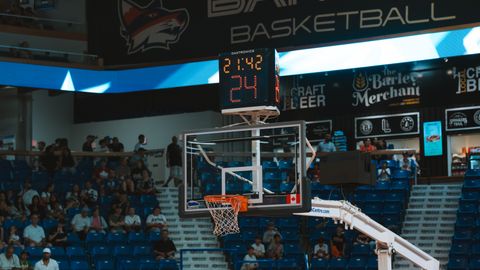
Without a time limit on possession, a team holding a lead can simply keep the ball, which is entirely rational and produces an unwatchable contest. The shot clock removes that option by requiring an attempt on the basket within a fixed period of gaining possession of the ball. Its introduction changed the sport from one in which a lead could be protected by inaction into one where every possession ends in a shot.
That single change is responsible for the pace and the scoring of the modern game far more than any development in athleticism has been. It also created the possession as a countable unit, which is what almost all modern statistical analysis of the sport is built upon.
What counts as a legal attempt
The rule requires the ball to leave the shooter's hands before the clock expires and then to make contact with the rim. A shot missing the rim entirely is a violation even where it was released in time, which prevents a token heave at the buzzer. The rim requirement is what makes the rule a genuine constraint rather than a formality, since anybody can throw the ball towards the backboard.
Officials therefore have to judge two things almost simultaneously, the moment of release and the contact with the rim that follows it. Replay is available for the timing of the release in most competitions, because the margin is frequently smaller than the eye can resolve.
The offensive rebound reset
A shot that touches the rim and is then rebounded by the attacking team resets the clock, but to a shorter period than a fresh possession would receive. The shortened reset exists because the team never actually lost possession and should not therefore be granted the full allowance again. It rewards offensive rebounding without allowing a team to extend one possession indefinitely through a series of repeated attempts.
The specific length of the reset differs between competitions, and it is among the more consequential differences between the rule sets. Coaches plan around it, since a short reset favours attacking immediately rather than rebuilding a set play from the beginning.
Fouls, kicks and the other resets
A defensive foul committed in the backcourt generally produces a full reset, while one in the frontcourt produces only the shorter period. The distinction reflects how much of the court the attacking team still has to cover before it can realistically attempt a shot. Kicked balls and comparable violations follow the same logic, resetting to whichever period leaves the offence a reasonable opportunity to score.
A jump ball situation retained by the offence typically continues the existing clock rather than resetting it at all. These rules are unglamorous but they determine the pace of the closing minutes, which is exactly where most matches are decided.
How the clock shapes the endgame
A team ahead late wants to consume the full period on every possession, while a team behind wants to shoot early and then foul. That asymmetry is created entirely by the clock, and it produces the distinctive and rather artificial rhythm of the final minutes. The gap between the game clock and the shot clock is the quantity coaches are actually managing during that period.
Once the game clock is shorter than the shot clock, the trailing team must foul because the leading team need never shoot again. Understanding that relationship explains almost every apparently strange decision taken in the closing stages of a close match.
- The rim requirement is what makes the rule a real constraint
- A short reset rewards rebounding without extending a possession indefinitely
- The gap between the two clocks is what coaches actually manage